Ready for more leads?
Book a quick 15 min intro call with Search Geeks
How to use AI for SEO: Stop chasing rankings and start winning revenue

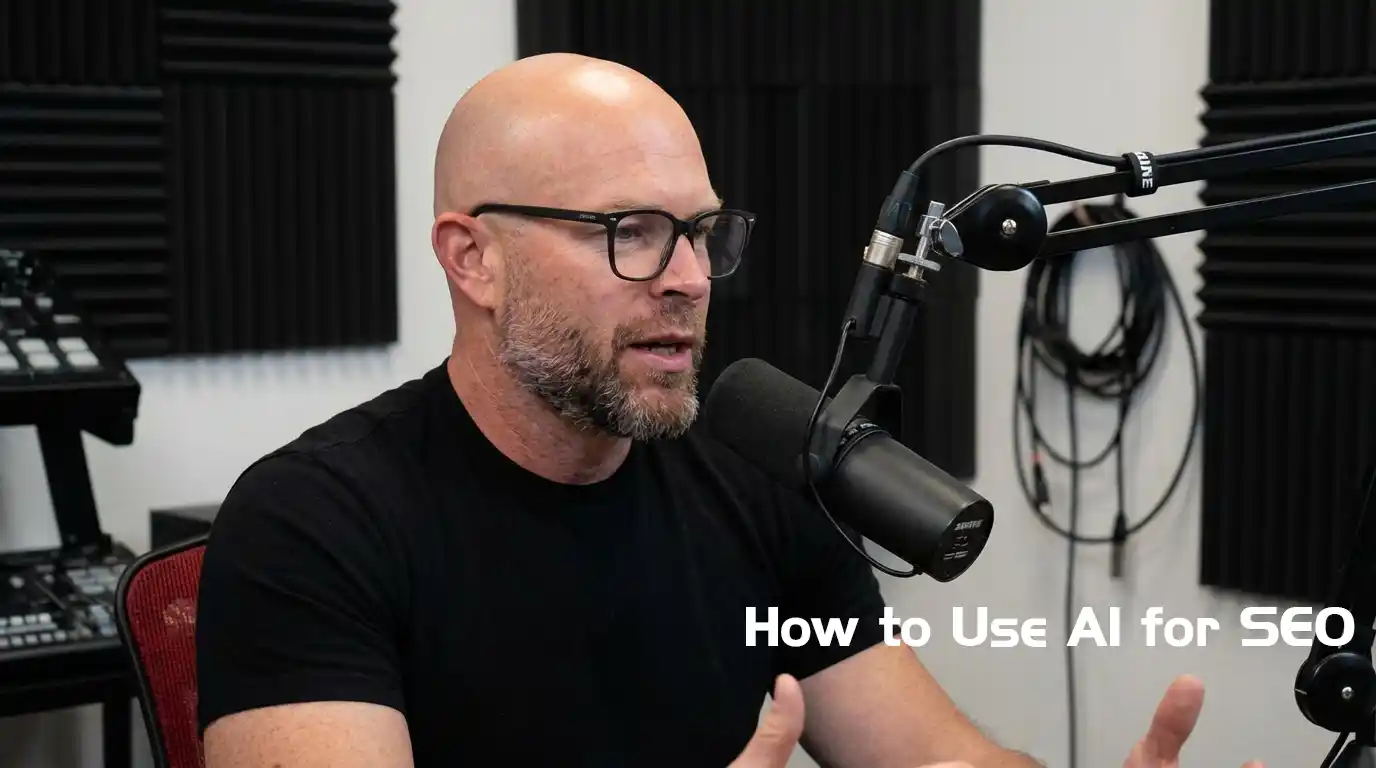
Using AI for SEO in 2026 means shifting your focus from traditional ranking tactics to Answer Engine Optimization (AEO). The goal is to re-architect your content with structured data, direct answers, and verifiable authority, making your website the citable source for AI-generated results and capturing high-intent, zero-click traffic.
The Paradigm Shift: Why Your SEO Strategy from 2024 is Already Obsolete
For over two decades, the digital marketing playbook has been clear: create content, optimize it for a keyword, build links, and climb the ten blue links on Google. This entire model, which fueled an $80bn industry, is being systematically dismantled. The search engine we knew is gone. In its place is an entirely new machine: the Answer Engine.
This isn't a future prediction; it's the current reality. Google's Search Generative Experience (SGE), Microsoft Bing's integrated chat, and other AI search functionalities are designed to do one thing: provide a direct answer, eliminating the need for a user to click through to a website. The data is stark. Even before the full SGE rollout, over 60% of searches are already zero clicks. This means a user finds their answer on the search results page itself and never visits a single website.
The impact of this shift is accelerating. Researchers have found that AI summaries are actively eroding organic traffic; these features have already lowered clicks by 35%, and traditional searches are expected to drop another 25% by next year. Chasing the #1 ranking is becoming a pyrrhic victory. You can be at the top of the organic results, but if the AI-generated answer sits above you, you've already lost the most valuable traffic. The old SEO strategy is like trying to win a race by running on a track that's been removed.
Traditional SEO vs. Answer Engine Optimization (AEO): A Head-to-Head Comparison
Understanding the fundamental differences between the old and new models is the first step toward building a sustainable digital marketing strategy. The goals, tactics, and even the definition of success have changed.
Traditional SEO (Chasing Rankings)
- Primary Goal: Achieve a high position (ideally #1-3) on the standard search results page for a target keyword.
- Core Tactic: On-page SEO focused on keyword density, meta descriptions, title tag optimization, and extensive link building outreach to signal authority to search engine algorithms.
- Measures of Success: Keyword rankings, organic traffic volume, and domain authority scores.
- Pros: A well-understood and established process. A vast ecosystem of SEO tools like Ahrefs and Semrush are built around this methodology. It can still drive brand awareness and traffic for certain types of informational queries.
- Cons: Highly vulnerable to zero-click searches and AI-generated answers. Often focuses on vanity metrics (traffic) that don't translate to business results like leads or revenue. It creates a constant, expensive battle for rankings that can disappear overnight with an algorithm update.
Answer Engine Optimization (AEO)
- Primary Goal: Become the direct, citable source for the AI-generated answer. Your brand's information appears within the AI summary itself, with a source link.
- Core Tactic: Content creation structured around answering specific user questions. Heavy emphasis on schema markup generation, factual accuracy, entity recognition, and demonstrating first-hand experience (E-E-A-T).
- Measures of Success: Visibility in featured snippets and AI answers, generation of high-intent leads, and direct impact on return on investment (ROI).
- Pros: A sustainable strategy built for the future of search. It bypasses the traditional SERP competition to capture the most qualified users. Positions your brand as the definitive authority, building immense trust. It directly impacts revenue, not just website traffic.
- Cons: Requires a significant shift in content strategy and mindset away from keyword-stuffing. Measurement is more sophisticated, focusing on performance metrics tied to conversions rather than just rankings. It is a newer discipline with fewer established "experts."
Introducing Answer Engine Optimization (AEO): Your Blueprint for AI-Era SEO
AEO is not just a new acronym; it's a fundamental re-architecting of your entire content marketing and SEO strategy. It’s about creating content so clear, authoritative, and well-structured that AI models like Google's and Bing's choose it as the bedrock for their generated answers. Here’s a practical guide to implementing it.
Step 1: Shift from Keywords to Conversational Intent
The first step is to change how you think about keyword research. People don't talk to AI assistants like they type into a search bar. They ask full, conversational questions. Your goal is to capture the exact questions your ideal customers are asking.
This isn't entirely new. Google's embrace of machine learning has been pointing this way for years. As far back as 2015, Google began using RankBrain, an early form of AI, to better understand search intent beyond the literal keywords. The later introduction of BERT and other Natural Language Processing (NLP) models furthered this. AEO is the logical conclusion of this decade-long evolution.
Instead of starting with a short-tail keyword like "roof repair," use SEO tools with AI-powered insights to perform a deep search intent analysis. Identify long-tail keywords that are phrased as questions:
- "How much does it cost to replace 10 shingles?"
- "What are the signs I need a new roof instead of a repair?"
- "Can a roof be repaired in the rain?"
Building topic clusters around these conversational queries allows you to establish topical authority on a subject, signaling to the answer engine that you are a comprehensive resource worth citing.
Step 2: Re-Architect Your Content for Direct Answers
Once you know the questions, you must structure your website content to answer them explicitly. AI crawlers are looking for clarity and efficiency. They need to find the answer quickly and confirm that it's the primary point of the page. This is where most content fails.
- Adopt the Inverted Pyramid: Answer the question directly and concisely in the very first paragraph. Don't bury the lead with a long, rambling introduction. Give the answer, then use the rest of the page to provide depth, context, and proof.
- Use Q&A Formatting: Structure your articles with the questions themselves as your subheadings (H2s, H3s). This creates a logical, scannable flow for both human users and AI crawlers. An article titled "A Guide to Roof Repair" should contain sections like "What Are The Most Common Types of Roof Damage?" and "How Do I Find a Reputable Roofing Contractor?".
- Implement Schema Markup: This is the most critical technical SEO component of AEO. Schema markup is a code vocabulary you add to your website's HTML to turn your unstructured content into structured data. It explicitly tells the search engine what your content is about. Using types like "FAQPage," "HowTo," and "Article" schema is no longer optional. It is the language answer engines speak, and failing to use it makes your content effectively invisible to them. AI-powered tools can help with schema markup generation, simplifying a once-complex task.
Step 3: Build Verifiable, Citable Authority
In the age of AI-generated content, trust is the most valuable currency. Both users and the AI algorithms that serve them are actively looking for signals of trustworthiness and expertise. This is the essence of Google's E-E-A-T (Experience, Expertise, Authoritativeness, Trustworthiness) guidelines and its Helpful Content System. Building citable authority is how you win.
- Prioritize Factual Accuracy: Every claim you make should be verifiable. Link out to authoritative studies, cite official sources, and ensure all data is current. AI models cross-reference information, and sites with inaccurate or unsubstantiated claims are quickly flagged as unreliable.
- Commit to Regular Content Audits: Stale content is untrustworthy content. A page written in 2022 about "the best marketing automation software" is now dangerously out of date. You must have a workflow for regularly reviewing, updating, and republishing your core content to reflect the latest information. This signals to the answer engine that your content is a living, reliable resource.
- Showcase First-Hand Experience: This is where human expertise becomes your ultimate advantage. Integrate case studies, original research, and unique data analysis into your content. Detail your process. Explain *why* you do things a certain way. An AI can summarize what's already known; it cannot replicate your unique experience. This focus on demonstrable results is what truly builds a brand and drives conversions. It's the difference between traffic and revenue, a lesson one of our clients in a highly competitive trade learned quickly. After implementing our AEO strategy, they told us, "We've had more leads in the last 6 months than the previous 8 years combined." That is the power of citable authority.
The Role of AI Tools in Modern SEO: Assistant, Not Author
The market is flooded with AI SEO tools, from AI writing assistants to comprehensive platforms like Surfer SEO, MarketMuse, and Clearscope. This has led to a lot of confusion. So, can you do SEO with AI? Yes, but its role must be clearly defined.
Can ChatGPT Help with SEO?
Absolutely. ChatGPT and other large language models are phenomenal tools for accelerating the SEO workflow. Use them for:
- Brainstorming topic clusters and conversational queries.
- Conducting SERP analysis to understand what questions competitors are answering.
- Generating content briefs and outlines based on your AEO strategy.
- Creating initial drafts of schema markup code for a developer to review.
- Performing data analysis on performance metrics from Google Search Console.
What you should *not* do is use ChatGPT or any generative AI to write and publish entire articles without significant human intervention. This leads directly to a critical violation. According to Google's own documentation, using automation—including AI—to generate content with the primary purpose of manipulating ranking in search results is a violation of Google's spam policies. The key is intent. If you're using AI as a shortcut to produce low-quality, unoriginal content, you will eventually be penalized. If you're using it to augment the workflow of a human expert, you're using it correctly.
What is the 30% rule for AI?
The "30% rule" is a myth that has circulated online, suggesting that if you edit 30% of an AI-generated text, it will evade AI content detection and be "safe" for SEO. This completely misses the point. The goal is not to trick a detection tool. The goal is to provide unique value to the end-user. The question isn't "how much do I need to edit this?" but "what unique experience, data, or perspective can I add that an AI could not possibly know?". Sometimes this might mean a 90% rewrite; other times, it might be adding a single, critical data point from an internal case study. Forget the arbitrary percentage and focus on adding verifiable, human-first value.
What is the best AI to use for SEO?
There is no single "best" AI. A robust AI SEO strategy relies on a stack of tools, not a silver bullet. You will likely use a combination of:
- Large Language Models (LLMs): Like ChatGPT or Google Bard for research, ideation, and prompt engineering.
- AI-Integrated SEO Platforms: Like Semrush or NeuronWriter for competitor analysis, keyword clustering, and content optimization.
- Specialized AI Writing Assistants: Like Jasper or Copy.ai for helping to draft specific types of copy, such as meta descriptions or ad variants, at scale.
The right tool depends on the task. The strategy—Answer Engine Optimization—is what unites their use into a coherent and effective system.
Making the Right Choice for Your Needs
The correct path forward depends on your resources, your goals, and your tolerance for risk in a rapidly changing digital landscape. There isn't a one-size-fits-all solution, but here is some tailored advice for different types of business leaders.
For The Frustrated Traditionalist
You've invested heavily in traditional SEO for your service business but see declining traffic and, more importantly, very little impact on your bottom line. The leads you get are low-quality. Instead of a complete overhaul, start with a pilot project. Choose one of your most important service pages. Conduct AEO-focused research to identify 3-5 critical questions your customers ask about that service. Rework the page content to answer those questions directly, add FAQPage schema, and track the phone calls and form submissions from that specific page. Proving the ROI on a small scale will give you the confidence to expand the strategy.
For The Forward-Thinking Growth Hacker
As a marketing manager, you see the writing on the wall. You understand that SGE and zero-click search represent an existential threat to your current traffic acquisition model. You need to get ahead now. Your move is to go all-in on AEO. Propose a comprehensive content audit of your entire site, remapping your existing articles and blogs into topic clusters built around conversational intent. Prioritize creating new, "citable authority" content that includes original data or unique industry insights. Your goal is to make your brand's website the indispensable resource for your entire niche, ensuring you own the answer space before your competitors even know the game has changed.
For The Overwhelmed Business Owner
You run a local service business and know you need to be visible online, but you don't have the time or expertise to become an expert in SEO, AI, and content marketing. Your time is best spent serving your customers and running your company. Your best option is to find a trusted partner. You need a 'done-for-you' system managed by a team that lives and breathes this technology. Seek out an agency that speaks in terms of leads and revenue, not just rankings and traffic. They should be able to explain their AEO process clearly and show you how they will measure success based on tangible business outcomes.
Ultimately, navigating the transition from search engines to answer engines requires a strategic partner who understands both the technology and your business goals. For a personalized assessment of your current online presence and a free, no-obligation AEO strategy session, we invite you to contact our expert team. At Search Geeks, our San Diego, CA-based specialists have been helping businesses thrive through major search algorithm shifts for over a decade, and we are dedicated to delivering marketing that generates revenue, not just reports.