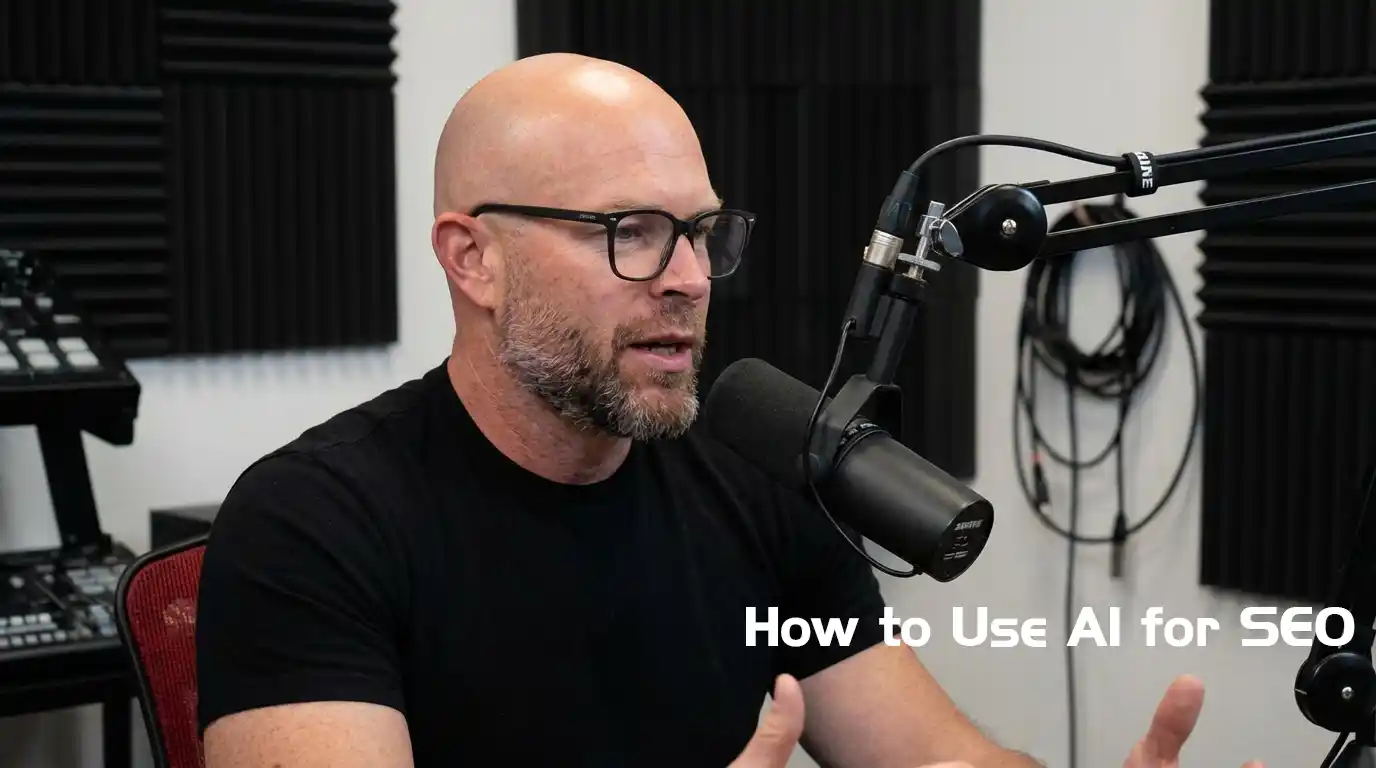
Ready for more leads?
Book a quick 15 min intro call with Search Geeks
SEO vs GEO: The 2026 playbook for driving revenue from AI search

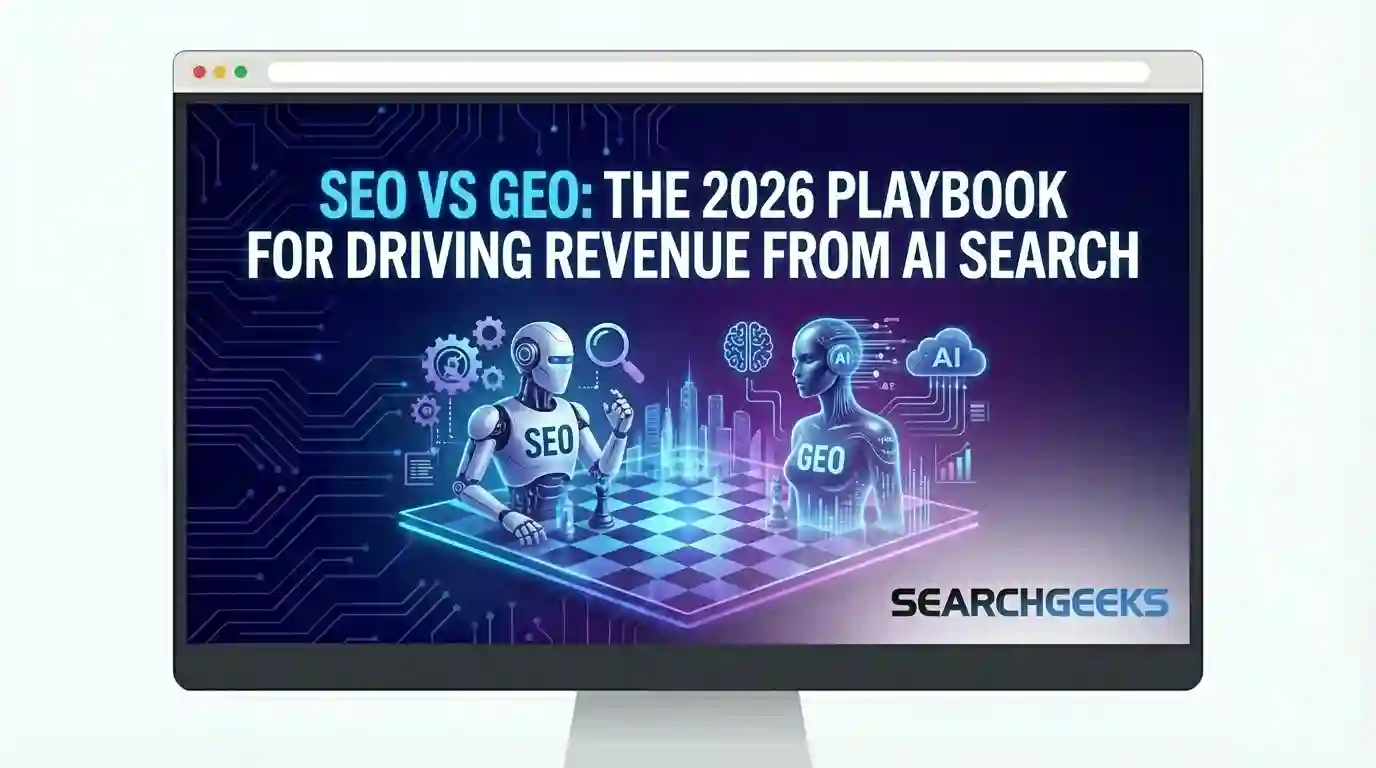
The debate between generative engine optimization vs SEO is a distraction from the real objective: driving revenue. The future of digital marketing isn't about choosing one over the other, but implementing a unified strategy where traditional SEO builds foundational authority and Answer Engine Optimization (AEO) structures content for direct AI citations.
The Seismic Shift: How AI Is Redrawing the Search Landscape
For over two decades, the rules of online visibility were relatively stable. You performed keyword research, created valuable content, built links, and climbed the search engine results pages (SERPs). But in the last 24 months, the ground has permanently shifted beneath our feet. The introduction and rapid integration of generative AI into search, exemplified by Google's AI Overviews (formerly Google SGE), Microsoft Copilot in Bing, and standalone engines like Perplexity, has triggered a wave of panic and confusion across the marketing world.
Business owners and marketers are asking the same urgent question: "Is SEO dead?" This has given rise to a new, buzzy acronym: GEO, or Generative Engine Optimization. The prevailing narrative pits these two concepts against each other—the old guard versus the new paradigm. This is a fundamentally flawed perspective. The "SEO vs GEO" debate misses the point entirely. It's not a replacement; it's an evolution. Winning in this new era doesn't mean abandoning the proven principles of search engine optimization. It means augmenting them with a more precise, tactical framework designed specifically for how Large Language Models (LLMs) find, process, and present information.
The most effective and profitable path forward is a unified digital marketing strategy. This approach leverages the deep authority and trust built through years of sound SEO practices as the foundation, then layers on a specific set of tactics we call Answer Engine Optimization (AEO). This is the key to not just surviving, but thriving in the future of search.
Deconstructing the Acronyms: SEO, GEO, and AEO Defined
To build a winning strategy, we first need to cut through the jargon and establish clear, business-oriented definitions. Understanding the role and limitations of each concept is critical to making informed decisions that impact your bottom line.
Traditional SEO (Search Engine Optimization): The Unshakeable Foundation
Search Engine Optimization is the holistic process of improving a website's visibility for relevant searches in traditional search engines like Google. It is a mature, multifaceted discipline built on several core pillars: Technical SEO (ensuring a site is crawlable and fast), On-Page SEO (optimizing individual pages around topics and user intent), content creation (developing valuable, relevant long-form content), and link building (earning external signals of authority). The primary goal of traditional SEO has always been to build trust with search algorithms to earn higher rankings and, consequently, more organic traffic.
Generative Engine Optimization (GEO): The Ambitious Newcomer
Generative Engine Optimization is a broad, somewhat theoretical term for the practice of influencing the outputs of generative AI models like OpenAI's GPT series, Google's Gemini, and Anthropic's models. In principle, GEO aims to have a brand's information, perspective, or products featured prominently in AI-generated answers, whether in a search engine's AI Overviews or a direct ChatGPT response. However, GEO as a standalone concept is often ill-defined and lacks a concrete set of actionable tactics separate from what already constitutes good digital marketing. In fact, effective GEO (Generative Engine Optimization) relies on the strong technical, content, and authority foundations that SEO has always built according to industry analysis. Its ambition is correct, but its framework is incomplete.
Answer Engine Optimization (AEO): A Practical, Actionable Framework
Answer Engine Optimization is our preferred, results-oriented framework. AEO is a specific, tactical subset of your overall digital strategy focused on one thing: structuring your brand's expert knowledge into the most clear, factual, and citable answers for the questions your customers are asking. It’s not about "optimizing for an engine"; it's about becoming the definitive source the engine quotes. AEO recognizes that LLMs are not just search engines; they are information retrieval and synthesis machines. This framework provides the direct inputs—the structured data, the concise facts, the clear Q&As—that these AI models require. The most effective approach is to integrate SEO and AEO, starting with solid SEO fundamentals and then layering in AEO tactics.
Why Foundational SEO is Now the Price of Admission for AI Visibility
In the early, chaotic days of AI search, some believed that new "hacks" or prompt engineering tricks could manipulate LLMs. That door is closing fast. As AI models have become more sophisticated, they have been explicitly programmed to combat misinformation and prioritize signals of trust. The result? The core tenets of good SEO are now more critical than ever.
Your website's E-E-A-T (Experience, Expertise, Authoritativeness, Trustworthiness) is no longer a conceptual guideline for Google's human raters; it is a primary, machine-readable ranking factor for AI. Large Language Models are actively looking for signals that you are a legitimate, trustworthy entity in your space. This is where foundational SEO becomes the non-negotiable price of entry.
- E-E-A-T and Topical Authority: A robust library of expert content, clear author attribution, a comprehensive "About Us" page, and positive off-site mentions are now direct inputs for an AI's trust algorithm. An LLM trying to answer a complex question will weigh a page from a well-established, authoritative site far more heavily than one from an anonymous, thin-content source. Building topical authority is no longer just for rankings; it's for credibility.
- Technical SEO and Information Architecture: A clean, logical site structure, fast load times (Core Web Vitals), and the use of Semantic HTML are vital. An AI crawler, much like a traditional one, needs to be able to efficiently access and understand your content. A technically sound website makes it easier for the machine learning models underlying the AI to parse your information and recognize its value, facilitating better information retrieval.
- Link Building and Brand Mentions: In the AI era, link building is less about "link juice" and more about third-party validation. Links from reputable sites, citations in industry publications, and even unstructured brand mentions across the web serve as powerful votes of confidence. These signals tell AI engines that your brand is a recognized and respected part of the real-world conversation in your field.
Without this strong foundation of traditional SEO, any attempt at AEO or GEO is like building a house on sand. You might get a few fleeting mentions, but you will never become the consistently cited authority that drives meaningful business results.
The Tactical Pivot: Shifting from Keywords to Direct Answers
While SEO provides the foundation, AEO provides the targeted tactics for the new search reality. This requires a significant mental and tactical shift away from a purely keyword-centric view of the world to an answer-centric one. You must transition from optimizing for what people type to optimizing for what they ultimately need to know.
From Keyword Research to Query Understanding
The nature of search behavior is changing. While short keywords still exist, conversational AI encourages longer, more complex queries. We are moving from a user typing "best business phone system" to asking an AI, "What is the best VOIP phone system for a 15-person distributed team that needs call recording and integrates with Salesforce?" Research shows this trend is accelerating; queries for generative engines are longer, averaging 23 words versus 4 for traditional search, and these engines prioritize well-organized, easy-to-parse content. This requires a deeper level of query understanding. You must anticipate the entire user journey and the full spectrum of questions a potential customer has, from initial awareness to final purchase consideration.
Structuring Content for Citability
To be the source an AI cites, your content must be structured for machine readability and immediate comprehension. This is where AEO tactics shine. For one of our clients, a specialized medical practice, implementing this structured approach was a game-changer. They told us, "Nobody has ever done anything like this for our practice!" The goal is to make your website the most efficient and reliable place for an AI to get its facts.
- Question & Answer Formats: Proactively identify and answer the questions your customers ask. Use tools like Semrush or Ahrefs to analyze "People Also Ask" (PAA) data and structure your content with clear headings (H2s, H3s) that pose the question, followed by a direct, concise answer.
- Schema Markup and Structured Data: This is no longer optional. Using Schema Markup is like giving the AI a pre-labeled diagram of your content. It explicitly defines entities—what your company is, what products you sell, who your experts are—and their relationships. This is the bedrock of Entity SEO and directly feeds Google's Knowledge Graph, a primary source for AI models.
- Factual Accuracy and Brevity: LLMs are designed to synthesize information. They reward content that is factually accurate, clear, and easy to lift. Remove fluff and marketing jargon from the core informational parts of your content. State facts as facts. This doesn't mean your long-form content is dead; it means your persuasive, perspectival content should be supported by easily extractable, citable factual statements.
- Voice Search Optimization: The conversational nature of AI search is closely linked to voice search. Optimizing for natural language questions makes your content highly relevant for both text-based conversational AI and voice-activated assistants.
Redefining Success: How to Measure ROI in the Age of AI Search
For years, the gold standard metric for SEO success was organic traffic, measured by clicks. But that model is being fundamentally challenged. As of late 2024, nearly 60% of Google searches in the U.S. end without a click to an external website. These zero-click searches are even more prevalent on mobile. If users are getting their answers directly in the SERP from an AI Overview, does that mean your marketing has failed? Absolutely not. It means you have to redefine and measure success differently.
Moving Beyond Clicks: The Value of AI Citations and Brand Mentions
The new primary success metric for top-of-funnel visibility is the citation. When your brand is cited as the source in an AI-generated answer, it is a powerful endorsement. This "zero-click visibility" places your brand name directly in front of a user at their precise moment of need, positioning you as the definitive authority. While it doesn't result in an immediate session, it builds immense brand visibility and trust. Over time, this exposure leads to higher-quality direct traffic and branded searches from users who now see you as the go-to expert.
This doesn't mean clicks are gone. In fact, for users with higher commercial intent, AI-driven traffic can be incredibly valuable. An Adobe report highlighted that in the US, AI-driven traffic to retail websites increased 12-fold between July 2024 and February 2025. These users have had their initial informational questions answered by the AI (which cited you) and are now clicking through to purchase or convert. This is how you generate high-intent leads that directly impact revenue. As one of our B2B clients reported after we implemented a unified SEO and AEO strategy, "We've had more leads in the last 6 months than the previous 8 years combined."
Tracking What Matters: New KPIs for a New Era
Your analytics dashboard needs to evolve. While you'll still track organic traffic and conversions, you must add new Key Performance Indicators (KPIs) to your digital marketing strategy:
- Brand Citations in AI Results: Using brand monitoring tools or manual checks to track how often your domain is cited as a source in AI Overviews for your most important commercial queries.
- Featured Snippets and PAA Rankings: Track your rankings in these SERP features, as they are strong leading indicators of being used as a source for AI-generated answers.
- Branded Search Volume Growth: Monitor Google Search Console for an increase in people searching for your brand name directly. This is a lagging indicator of the brand awareness built through AI citations.
- Lead Quality and Conversion Rate: Pay close attention to the conversion rate of traffic coming from search. You may see fewer visitors overall, but if they are of a higher quality and convert at a better rate, your ROI is increasing.
Making the Right Choice for Your Needs
There is no one-size-fits-all answer, but there is a strategic framework that can be adapted to your specific business reality. The key is to understand where you are today and what your primary business objectives are.
For the Pragmatic Service Business Owner
Your focus is on calls, forms, and booked jobs. You don't need to be an expert on natural language processing. Your best path is to invest in a robust, foundational SEO strategy with a strong emphasis on Local SEO and Hyperlocal Search. Your partner should then layer in AEO tactics for your core services, creating clear, citable answers to the questions your local customers ask every day (e.g., "how much does a new roof cost," "signs you need a chiropractor after a car accident"). The goal is to build overwhelming local authority so that when a user in your area asks Google a question, your business is the cited answer. This is the most direct path to revenue.
For the Forward-Thinking Marketer
You understand that the landscape has changed and you need to keep your company ahead of the curve. Your role is to champion a unified SEO + AEO strategy internally. You need an expert partner who can execute on both the deep technical SEO requirements and the nuanced content structuring for AEO. Focus your efforts on building a comprehensive content library that establishes true topical authority, meticulously implementing schema markup across your site, and working with your agency to develop new models for measuring the ROI of brand citations. You are not just optimizing pages; you are building the infrastructure for the future of search.
For the Skeptical SEO Veteran
You've seen buzzwords come and go, and you're right to be wary. But AEO isn't a replacement for the skills you've spent years honing; it's the next logical application of them. Think of AEO as the evolution of on-page and technical SEO for a new type of output. The work you've done on semantic search, entity optimization, and understanding user intent is the exact foundation required. AEO is simply about applying those principles to make your content not just rankable, but citable. It’s about optimizing for machine-based information retrieval, which is a challenge perfectly suited to your expertise.
Ultimately, the debate over Generative Engine Optimization vs SEO is a false choice. Success in 2026 and beyond will be defined by those who build a robust foundation of authority with traditional SEO and then precisely target AI models with the structured, citable answers provided by Answer Engine Optimization. This unified approach is the most reliable path to sustained brand visibility and, most importantly, profitable growth. For a personalized assessment of how this strategy can be applied to your business, contact the expert team at Search Geeks in San Diego, CA today.